A five-person startup in Bengaluru has two options. It can sign a three-year lease on a bare floor, spend a few months on fit-out, and pay a large security deposit upfront. Or it can pick a shared office space for rent, move in next Monday, and pay one monthly bill that covers the desk, Wi-Fi, power backup, and coffee.
More Indian businesses are choosing the second option, and not just startups. This guide answers the question of what is shared office space, explains how it works in India, and covers the shared office space benefits that matter most when you’re comparing a shared office space for rent with a conventional lease.
What Is Shared Office Space?
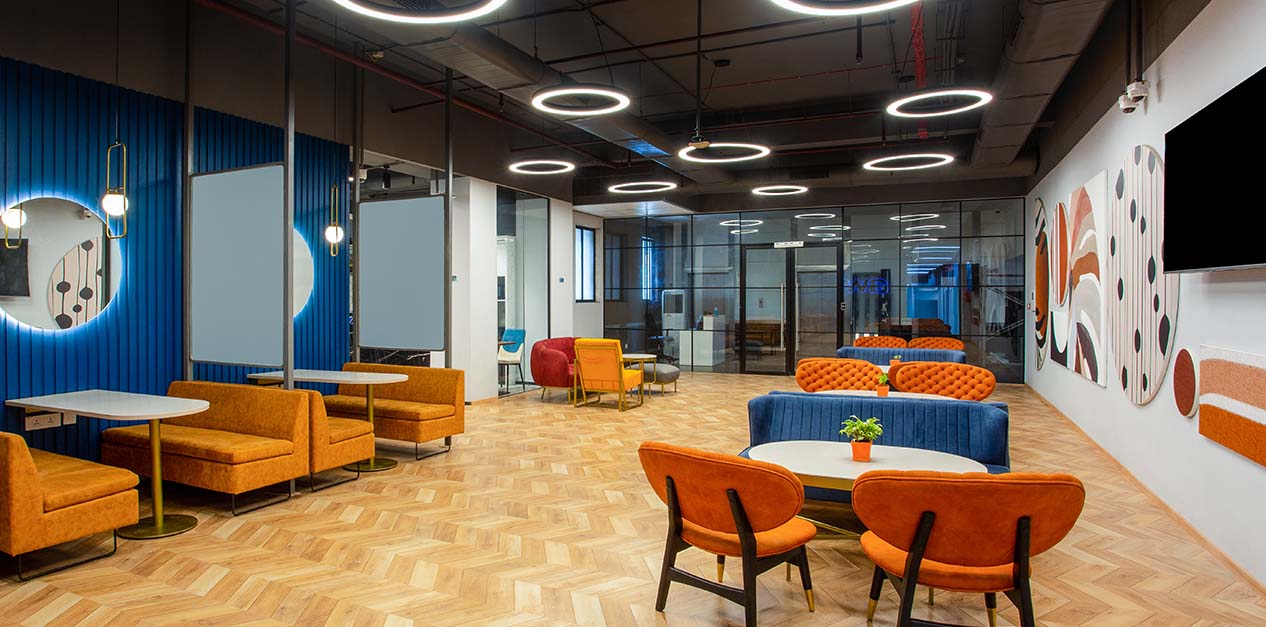
So, what is shared office space? It’s a fully equipped workspace run by an operator, where several companies and individuals work in the same building and share common facilities. You rent seats or private rooms instead of an entire floor. The operator handles furniture, internet, housekeeping, security, and maintenance.
Shared office space for rent in India usually comes in a few formats:
- Flexi desk (hot desk): any open seat in a shared area, good for hybrid workers and freelancers
- Fixed desk: your own dedicated seat in a shared area
- Private cabin: a lockable room for a team, with access to shared meeting rooms and lounges
- Day pass: pay-per-day access, useful for occasional office days
- Virtual office: a business address for registration and mail handling, without a physical seat
Answering what is shared office space also means knowing what it isn’t. It’s different from a managed office, where an operator builds a private, branded office for one company. Our guide on managed offices vs coworking spaces explains that difference in more detail.
How Shared Office Space Works in India
Renting a shared office space for rent is much simpler than leasing a commercial property. The process typically looks like this:
- Pick a location and plan. Shortlist shared office space for rent near your team’s homes or your clients, then choose between flexi desks, fixed desks, or cabins.
- Visit the centre. Check the seating, noise levels, meeting rooms, parking, and metro access at a busy time of day.
- Sign a short agreement. Most operators offer monthly or short-term plans, with a refundable deposit that’s far smaller than a conventional lease deposit.
- Move in. Seats, internet, and access cards are usually ready within days, sometimes the same week.
- Pay one monthly invoice. Rent, utilities, housekeeping, and common amenities are bundled into one bill. In India, office rental services attract 18 percent GST, which GST-registered businesses can usually claim as input tax credit.
The price of shared office space for rent varies by city, location, and plan. Awfis plans, for example, start at Rs 300 per day for a day pass and go up to about Rs 16,000 per month, depending on the format. A 2026 myHQ study of 1,384 coworking centres across 30 cities found that national brands charge about 19 percent more than independent operators, which reflects demand for multi-city networks and consistent quality.
Shared Office Space Benefits
Here are the shared office space benefits that tend to matter most to Indian businesses.
1. Lower Upfront Cost
A conventional lease means a large security deposit, brokerage, fit-out, and furniture before anyone sits down. With a shared office space for rent, those costs are built into a monthly fee. That frees up cash for hiring and growth, which is one of the biggest shared office space benefits for early-stage companies.
2. Speed to Move In
You can usually move into a shared office space for rent within days. A traditional office can take months once you add negotiations, approvals, and fit-out. For a company opening in a new city, that difference can decide whether the team starts this quarter or next.
3. Flexibility to Scale
Teams grow and shrink. A shared office space for rent lets you add seats, move into a bigger cabin, or reduce your footprint without breaking a long lease. This is why many companies treat a shared office space for rent as a bridge while they work out long-term headcount.
4. No Operational Hassle
The operator manages cleaning, security, power backup, internet uptime, and repairs. Your team doesn’t need a facilities manager. That operational relief is one of the shared office space benefits people notice in the first week.
5. Better Amenities Than You’d Build Yourself
Meeting rooms, phone booths, lounges, and event spaces are expensive to build for a small team. With a shared office space for rent, you get access to them as part of the plan, and you pay for extra meeting room hours only when you need them.
6. Networking and Visibility
Working next to other companies in a shared office space for rent creates chances to meet clients, partners, and future hires. It isn’t the main reason to choose a shared office, but it’s a real advantage, especially for startups and consultants.
7. A Professional Address in Prime Locations
A shared office space for rent lets a small team work from a recognised business district, such as Connaught Place in Delhi or BKC in Mumbai, at a fraction of what a full office there would cost.
Shared Office Space vs a Traditional Office
| Factor | Shared office space for rent | Traditional office lease |
|---|---|---|
| Upfront cost | Small refundable deposit | Large deposit, brokerage, fit-out |
| Time to move in | Days | Several months |
| Commitment | Monthly or short-term | Typically multi-year with lock-in |
| Maintenance | Handled by operator | Handled by you |
| Branding and layout | Limited | Fully customisable |
| Best for | Teams up to about 50, new cities, hybrid teams | Large, stable teams with fixed plans |
The main trade-off against these shared office space benefits is control. A traditional office gives you full say over layout, branding and security. If you need that but still want speed, a managed office sits in between. For a deeper look at the trade-offs, read our comparison of coworking vs a traditional office.
Is Shared Office Space Growing in India?
Yes, quickly. India’s flexible office stock reached 110 to 114 million sq ft by March 2025, about three times its 2020 size, according to CBRE and FICCI. Cushman & Wakefield recorded 191,306 flex seats leased across India’s top eight cities in H1 2026, up 68 percent year on year. Savills data shows flex operators took 18 percent of all office leasing in India’s six biggest markets in the same period.
Demand is no longer limited to startups. Global companies make up 55 to 60 percent of flex demand, CBRE and FICCI found, and Global Capability Centres accounted for 44 percent of flex seats leased in H1 2026, according to Cushman & Wakefield. For buyers, that growth means more choice when looking for shared office space for rent in any major Indian city.
How to Choose the Right Shared Office Space for Rent
Before you sign for any shared office space for rent, check these points:
- Commute: How long does it take your team to get there at 9:30 am?
- Inclusions: Are electricity, internet, printing and meeting room hours included, or billed extra?
- Internet and backup: Is there a redundant internet line and full power backup?
- Privacy: Do you need a lockable cabin, or is an open desk enough?
- Exit terms: What’s the notice period, and how quickly is the deposit refunded?
- Room to grow: Can the centre add seats or a larger cabin if your team grows?
- Network: If you have teams in other cities, can one operator cover all of them?
Working through this list makes it easier to compare one shared office space for rent with another on equal terms, and to weigh the shared office space benefits each centre actually delivers.
The Bottom Line
If you came here asking what is shared office space, the short answer is a ready-to-use office you rent by the seat. It has become a mainstream choice for Indian businesses of every size. The shared office space benefits are clear: lower upfront cost, faster move-in, the freedom to scale, and no facilities headaches. For most small and growing teams, a shared office space for rent is the faster, lower-risk way to get a professional office running.
Ready to compare options? Browse Awfis private cabins, fixed desks and flexi desks across 150+ centres in 17 cities, or start with a day pass to try a centre first.
Frequently Asked Questions
Q1. What is shared office space in simple terms?
It’s an office run by an operator where multiple companies rent desks or cabins and share facilities like meeting rooms, Wi-Fi, pantry, and reception.
Q2. What is shared office space used for?
Companies use it for main offices for small teams, satellite offices in new cities, project teams, hybrid employees who come in a few days a week, and as a registered business address through virtual office plans.
Q3. How much does shared office space for rent cost in India?
Costs depend on the city, location, and plan. Awfis plans start at Rs 300 per day and go up to about Rs 16,000 per month. Prime business districts and private cabins cost more than flexi desks in suburban areas.
Q4. What are the main shared office space benefits?
The main shared office space benefits are lower upfront cost, quick move-in, flexible terms, no maintenance work, access to shared amenities, networking, and a professional address in a prime location.
Q5. Is shared office space suitable for large companies?
Yes, for some teams. Large companies often take shared office space for rent for project teams, new-city pilots, or hybrid employees. For teams that need full privacy and branding, a managed office is usually a better fit.
Q6. Can I register my company at a shared office space for rent?
Many operators offer virtual office plans that provide a registered business address and support for GST registration. Check the documents the operator provides before you apply.